Exploring the Burj Khalifa: Its Impact and Significance
Intro
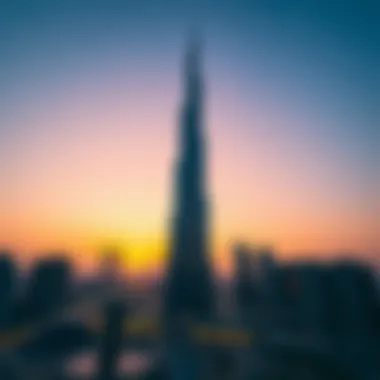
The Burj Khalifa stands as an epitome of human achievement, towering over the Dubai skyline with an elegance that captivates onlookers. It is not just a building; it is a landmark that tells a story of ambition, innovation, and cultural significance. From its breathtaking height to its multipurpose design, the Burj Khalifa encapsulates what modern engineering can achieve.
Located in the heart of Dubai, this architectural wonder provides a unique blend of residential, commercial, and leisure spaces. The very fact that it houses luxurious condominiums, offices, and even hotels makes it a microcosm of urban life. Investors, homebuyers, and real estate agents find in it a golden opportunity, not just to own a piece of history but to partake in a vibrant community that continues to flourish.
As one delves deeper into this structure, it becomes evident that the Burj Khalifa's impact extends beyond mere aesthetics. It has redefined the skyline of Dubai and revolutionized the city's economy and image on the global stage. This article navigates through the critical aspects of the Burj Khalifa, exploring its architectural significance, construction milestones, and the broader implications it has for real estate and tourism in Dubai.
Investors keen on tapping into the dynamics of property trends in Dubai will find analytically driven insights within these pages. Homebuyers will discover a multifaceted approach to understanding their investment options, while real estate agents and analysts will appreciate the depth of market analysis presented here.
By the end of this exploration, readers will not only gain knowledge about the Burj Khalifa itself but also the trends, opportunities, and future projections that shape the ever-evolving landscape of Dubai real estate.
Prolusion to Burj Khalifa
Understanding Burj Khalifa is essential for grasping the architectural marvel that it represents. As the tallest skyscraper in the world, it serves not only as a symbol of Dubai’s rapid urban development but also as a benchmark for future architectural endeavors. This article delves into the various facets of the Burj Khalifa, illuminating its significance, structural details, functional uses, and cultural impact.
Significance as a Landmark
The Burj Khalifa is more than just a tall building; it is an icon that embodies the ambitions of the Emirate of Dubai. This soaring structure draws millions of visitors each year, positioning itself as a key constituent of Dubai's tourism industry. It resonates deeply with themes of modernity and innovation, accurately reflecting the nation's vision to elevate its global profile. Nestled in the heart of the city, the tower acts as a stunning focal point for the Dubai skyline, providing a sense of direction and purpose amidst the bustling urban sprawl. Visitors flock to its observation deck not just to witness breathtaking views but also to be part of a structure that symbolizes human ingenuity at its peak.
Overview of Height
Towering at a staggering 828 meters, the Burj Khalifa is an engineering wonder that redefines our understanding of vertical architecture. To put this into perspective, the height of the Burj Khalifa is equivalent to about two-and-a-half times that of the Eiffel Tower or nearly three times that of the Empire State Building. This extraordinary height was achieved through meticulous engineering and architectural techniques, pushing the limits of what’s possible. It comprises 163 floors, each contributing to the overall grandeur of the structure while also housing residential, commercial, and recreational spaces. The significance of its height extends beyond aesthetics; it showcases the potential of modern engineering to redefine city landscapes.
"The Burj Khalifa is not just a building; it's an audacious leap towards the sky, challenging the very limits of architectural achievement."
Understanding Burj Khalifa provides key insights into how it stands as a catalyst for economic growth and a magnet for global tourism, reinforcing Dubai's status as a city of the future. Thus, this exploration sets the groundwork for delving deeper into its structural design, construction timeline, and multifaceted functionality.
Structural Details
Exploring the structural details of the Burj Khalifa is crucial in understanding not just its physical presence, but also its remarkable achievement in engineering and architecture. The essence of this skyscraper lies in its robust structure and innovative design, making it a case study in modern engineering marvels. Examining elements like the number of floors, height specifications, and architectural design reveals not only the building's capabilities but its impact on the urban landscape and its role in defining Dubai's global image.
Number of Floors
The Burj Khalifa looms impressively with a staggering 163 floors above ground and an additional 2 levels below ground. This high number of floors is not merely for show; it showcases the extensive planning and engineering that went into constructing a structure that can comfortably accommodate both residential and commercial spaces. The vast number of floors allows for a diverse range of functionalities—residences occupy the higher levels, while the lower floors are dedicated to offices and retail spaces.
This vertical design represents a shift in urban development, as the trend moves towards maximizing land use in metropolitan areas. Each floor contributes to the overall footprint of the building, effectively transforming the skyline, and offering a vast array of living and working conditions. For investors, owning property in such a significant structure is not just about space; it’s about being part of a global icon.
Height Specifications
When it comes to height specifications, the Burj Khalifa stands as the tallest building in the world, reaching a remarkable height of 828 meters or 2,717 feet. It’s important to note that the height isn't just a number; it symbolizes ambition and innovation in architectural design. This remarkable height was made possible through advanced construction techniques and materials designed to withstand Dubai's climate and its seismic activity.
The spire at the top serves a dual purpose: enhancing the aesthetic appeal and contributing to the overall height. Additionally, it plays a role in helping the structure deal with wind forces at such elevations. Investors need to appreciate that this staggering height offers breathtaking views of the city below, enhancing the value of properties and experiences associated with the Burj Khalifa.
Architectural Design
Architecturally, the Burj Khalifa showcases a stunning amalgamation of modern and cultural influences. Designed by the renowned architect Adrian Smith, who was then with Skidmore, Owings & Merrill, the building's shape is reminiscent of the Hymenocallis flower. This design choice reflects not only aesthetic aspirations but also functional considerations, with the tapered form effectively reducing wind resistance—a crucial aspect given its height.
The exterior finish of the tower comprises reflective glazing, which not only contributes to the beauty of Burj Khalifa but also plays a key role in energy efficiency. Inside, the layout is equally impressive, as spaces are allocated thoughtfully to ensure that residents, businesses, and visitors enjoy a remarkable experience. For homebuyers and agents, understanding the architectural finesse underscores its potential to become a symbol of luxury living in Dubai.
The Burj Khalifa isn't just a building; it’s a beacon of what can be achieved through vision and technology, redefining boundaries of engineering.
As one can see, the structural details of the Burj Khalifa do not merely define its silhouette against the sky, but stand as a testament to what can be accomplished in the world of architecture and engineering.


Construction Timeline
The construction timeline of the Burj Khalifa is a story of ambition and innovation. Understanding this timeline is crucial for grasping how this architectural wonder came to life. It showcases the complex coordination of various elements, such as design, engineering, and labor, all intertwined to achieve a phenomenal result. Each phase in the timeline serves as a marker of progress and achievement, reflecting the meticulous planning and effort required to raise this skyscraper above the clouds. Moreover, it highlights the various challenges faced and overcome along the way.
Initiation of the Project
The journey of the Burj Khalifa began in 2004 when it was first announced as part of a larger development project called Downtown Dubai. The initiation was significant not only for Dubai but also for the global architectural community. Once the plans were drawn up by the architects from Skidmore, Owings & Merrill, managing director Adrian Smith spearheaded the design. This marked the starting point in what would become a groundbreaking venture in skyscraper construction.
Key elements of this initiation phase included:
- Site Preparation: The ground-breaking ceremony was held in January 2004, kicking off the necessary excavation and foundation work.
- Financing: To fund this colossal project, Emaar Properties secured investments that raised billions. This showed the confidence investors had in Dubai’s future.
- Design Finalization: The initial design plans underwent rigorous modifications to ensure that they accommodated efficiency and sustainability in building operations.
Major Milestones
As the construction progressed, several milestones marked its path to completion. Each milestone was a testament to the engineering prowess involved and the collaborative efforts of various teams. Notable milestones in the Burj Khalifa's timeline included:
- Foundation Completion (2005): Creating a robust base that would support the building’s weight was a formidable challenge. The deep foundation involved extensive drilling and pouring of concrete, culminating in one of the largest concrete pours in history.
- Structural Framework: The structural steel framework rose steadily, and by 2007, it reached the height of the first sixty floors. The speed of construction was remarkable, thanks to advanced techniques like slipform technology.
- Height Records: In 2008, the Burj Khalifa became the tallest building in the world, surpassing its competitor, Taipei 101, by a significant margin. This event was celebrated internationally as a feat of engineering.
Completion and Inauguration
After almost six years of intense work, the Burj Khalifa was completed in October 2009. The grand inauguration took place on January 4, 2010, coinciding with the celebrations of Dubai's achievements in modern architecture and urban development. The opening ceremony was marked by an extravagant fireworks display, attracting global attention.
Some aspects of its completion that stand out include:
- Final Details: Completing the exterior glass and interior finishing took a significant amount of time, contributing to the building’s aesthetic and functional quality.
- Operational Readiness: Even after construction was completed, it took several additional months for the building to become fully operational, with systems tested thoroughly.
- Cultural Impact: The inauguration of the Burj Khalifa not only solidified Dubai’s position on the world map but also served as inspiration for future architectural designs and developments.
"The Burj Khalifa is not just a building; it is a narrative of ambition, technology, and the spirit of a nation."
Understanding the construction timeline provides insight into the dedication and revolutionary approaches that brought the Burj Khalifa to life, serving as a cornerstone for Dubai’s skyline and a symbol of architectural achievement.
Functional Aspects
The Burj Khalifa is not merely a towering feat of engineering; it serves as a multifaceted battleground where various functional elements come into play. Understanding the functional aspects of this iconic skyscraper sheds light on its role within Dubai, from providing luxurious residences to bustling commercial spaces and breathtaking observation decks. Each aspect contributes significantly to the overall utility and experience offered to residents, tourists, and business entities alike.
Residential Units
The Burj Khalifa houses 900 private residences, which range from sleek one-bedroom apartments to sprawling penthouses. These residential units are more than just places to live; they embody a lifestyle woven into the luxurious tapestry of Dubai's vibrant community. The architectural design prioritizes comfort and exclusivity, with each apartment featuring floor-to-ceiling windows that not only flood the space with natural light but also offer stunning views of the bustling city below.
Living in Burj Khalifa isn’t simply about having an address; it’s a status symbol. Residents enjoy amenities like dedicated concierge services, pools, and a state-of-the-art fitness center. Moreover, the residential aspect provides a vital contribution to the overall economy, encouraging affluent individuals and families to establish roots in the heart of Dubai.
Commercial Spaces
Commercially, the Burj Khalifa plays a pivotal role in defining Dubai as a business hub. The building accommodates various commercial spaces, which include office units that cater to high-profile firms and start-ups seeking a prime location. Tenant firms benefit from a global clientele and a networking environment that fosters innovation.
Occupying over a third of the building, the commercial spaces are designed with flexibility in mind. Some offices enjoy breathtaking views, which can inspire creativity and increase productivity. Additionally, the presence of flagship stores and some of the finest restaurants amplifies Burj Khalifa's appeal as a business destination.
Among the notable commercial entities, the corporate headquarters of Emirates Airline is housed within its walls. Such affiliations amplify the skyscraper’s importance as a symbol of success and ambition, making it a sought-after location for businesses aiming to thrive.
Observation Decks
One of the most alluring aspects of the Burj Khalifa is its observation decks, particularly "At the Top," located on the 124th and 148th floors. These decks offer visitors an unparalleled view of the cityscape, ensuring that both tourists and locals experience Dubai from a dizzying height. The perspective afforded at this altitude is often described as nothing short of transcendental, serving as a reminder of the city’s sprawling ingenuity and breathtaking beauty.
Observation decks are not just tourist traps; they serve as a critical revenue stream for Burj Khalifa. People from all over the world flock to capture the perfect photograph and savor a unique experience. With cafés and lounges nestled on these decks, visitors can relax and soak in the spectacular scenery, thus integrating leisure with the architectural marvel.
"Visiting the observation deck of Burj Khalifa is not just about seeing the city; it's about feeling connected to its spirit and ambition."
Economic Impact
The Burj Khalifa does more than scrape the sky; it plays a pivotal role in shaping Dubai's economic landscape. This iconic skyscraper is a testament to modern engineering, and its sprawling influence stretches far beyond just being a stunning architectural feat. Examining the economic impact of Burj Khalifa offers insights into how it contributes to various sectors and aids in boosting the overall economy of Dubai.
Contribution to Dubai’s Economy
The Burj Khalifa is not merely a glittering ornament in the Dubai skyline; it serves as a powerhouse driving numerous sectors of the economy.
- Employment Opportunities: The construction and continual maintenance of the Burj Khalifa have generated thousands of jobs, both directly and indirectly. Workers in construction, hospitality, and many other sectors find employment in roles revolving around this landmark.
- Real Estate Boom: The presence of this towering structure has significantly escalated property values in the surrounding districts. This spike in real estate has attracted a plethora of investors and options for homebuyers. The allure of living or operating near the tallest building remains strong.
- Business Hub: With commercial spaces within the tower, it has attracted multinational companies seeking prestige. Offices located in such a prominent structure bring visibility and stature, thereby enhancing business opportunities.
- Supply Chain Benefits: The construction necessitated the use of various materials and technology, fostering local manufacturing and supply chains. This ripple effect has empowered small local businesses, creating a robust ecosystem that supports and sustains multiple industries.
"The Burj Khalifa serves as a magnet for investment, proving that an architectural icon can stimulate the entire economy, from real estate to service providers."
Tourism and Burj Khalifa
Tourism is yet another gem in Burj Khalifa’s diadem of economic contributions. Visitors flock from all corners of the globe to witness the beauty of this colossal structure, and this tourism influx propels other sectors of Dubai's economy.
- Attraction Factor: Tourists are lured by the chance to experience breathtaking views from the observation decks and marvel at the nightly light shows. Each visitor contributes to various tourism sectors including hotels, restaurants, and retail, making it a significant driver of revenue.
- Cultural Events: The Burj Khalifa doubles as a focal point for various events which, in turn, enrich the cultural fabric of Dubai. Fireworks displays during New Year’s Eve, for example, attract thousands of spectators and contribute significantly to the local economy through increased spending.
- Travel Packages: Many travel agencies have tailored packages that highlight the Burj Khalifa experience. This has not only elevated the number of tourists but also allowed for incremental growth in the hospitality sector as hotels benefit from increased bookings surrounding these attractions.
In summary, the Burj Khalifa is far more than a mere high-rise; it is an economic dynamo that boosts Dubai's economy in ways that ripple across various sectors. Its influence on employment, real estate, tourism, and local businesses is profound, establishing it as a crucial pillar in the financial architecture of Dubai. As time marches on, the economic impacts of this skyscraper will no doubt evolve, continuing to shape a vibrant urban narrative.
Cultural Relevance
The Burj Khalifa stands not just as a monumental structure in the sky; it embodies a broader narrative of ambition, modernity, and the evolving identity of Dubai. This section examines its cultural significance, assessing how it influences and reflects both local and global perspectives.
Symbol of Modernity
The notion of modernity, particularly in the contexts of architecture and urban development, finds a quintessential representation in the Burj Khalifa. Rising 828 meters into the azure sky, it’s not merely about being the tallest building; it represents an audacious leap toward a new identity for Dubai. The design, courtesy of Adrian Smith, integrates traditional Islamic architecture with modern aesthetics, weaving cultural heritage into a contemporary framework.
- A beacon of global ambition: The Burj Khalifa communicates a message that Dubai is a player on the world stage. Its distinctive silhouette is a testament to what human ingenuity can achieve, inspiring cities worldwide to push the boundaries of their architectural aspirations.
- Cultural melting pot: Located in a city that thrives on diversity, the Burj Khalifa attracts millions from every corner of the globe. This confluence of cultures fosters an environment where traditional and modern practices coexist, enriching the local culture while positioning Dubai as a cosmopolitan hub.
This skyscraper serves as an emblematic bridge between past and future. It doesn’t solely belong to the present but evokes historical significance through its architectural nods while looking ahead toward possible innovations.
Burj Khalifa in Media
The Burj Khalifa has entrenched itself in popular media, morphing into an icon recognized far beyond the borders of the United Arab Emirates. Its appearances in movies, television, and various art forms amplify its cultural relevance.
- Film appearances: From blockbuster films such as Mission: Impossible – Ghost Protocol to local productions, the tower offers visually stunning backdrops, contributing to the cinematic depiction of modernity and luxury. Each frame displaying the Burj Khalifa adds to its allure, portraying a blend of drama and grandeur that captivates audiences.
- Social Media Influence: Platforms like Instagram and Facebook brim with countless photographs showcasing the Burj Khalifa, further amplifying its status as a social media landmark. This barrage of imagery not only fascinates but also weaves the structure deeply into the visual culture of the modern era.
This pervasive presence in media not only elevates the Burj Khalifa as an architectural marvel but also solidifies its role as a global cultural symbol. The shared dialogues around its representation reflect collective aspirations and anxieties about progress, urbanism, and the human experience.
"The Burj Khalifa is not just a testament to what can be built, but a symbol of human dreams coming to life."
Overall, the cultural relevance of the Burj Khalifa transcends its function as a skyscraper; it becomes a narrative of progress, innovation, and a vision of the future that resonates with people across the globe.
Challenges of Construction
The construction of the Burj Khalifa was not merely a feat of engineering; it was an ambitious venture that posed numerous challenges. Understanding these hurdles is crucial for grasping the complexity behind the building of the tallest structure in the world. From securing the right materials to overcoming geographical and environmental obstacles, each challenge presented a unique scenario that required innovative solutions. This section will delve into two primary aspects: the engineering challenges and the logistical considerations involved in erecting this iconic skyscraper.
Engineering Challenges
Building the Burj Khalifa meant tackling a myriad of engineering obstacles. Chief among these was the need for a robust structural design that could withstand the high winds and seismic activity prevalent in the region. For instance, engineers utilized a specially designed buttressed core system which effectively disperses wind loads. This led to the building’s distinctive figure, allowing it to stand tall and straight against nature’s forces.
Moreover, the sheer height of the tower demanded above-average material performance. For instance, concrete mix designs had to be specifically adapted to allow for long-distance pumping to reach elevated heights—some of which were over half a mile above ground level. To ensure that the materials could cope with the pressures, rigorously tested materials like high-strength concrete were used.


Additionally, the Burj Khalifa required a unique elevator system. Most conventional elevators wouldn’t suffice for such heights; thus, the KONE-designed elevators were specialized, holding the world record for the highest travel distance. These tailored engineering solutions don’t just establish a record in height but also reflect the need for reliability and safety in a modern skyscraper.
Logistical Considerations
The logistical aspects of constructing the Burj Khalifa were just as fundamental as the engineering ones. Transporting materials to the site was a major hurdle, especially given the project's scale. Heavy machinery and specialized equipment had to be transported and positioned accurately, which was a logistical puzzle in itself. For example, concrete was mixed on-site in a massive operation involving high-capacity mixers, ensuring quality control while enabling continuous supply during the construction phase.
Furthermore, workforce management became a task of its own. With thousands of workers from different parts of the world, communication and coordination were essential. The project required a sustainable supply chain to keep up with the construction pace without sacrificing safety standards. To facilitate this, project managers implemented a round-the-clock schedule, which meant planning shifts meticulously to maximize output while adhering to labor regulations.
"The complexities of logistical coordination often define the differentiation between successful skyscraper projects and those that become bogged down in delays."
In summary, the construction of the Burj Khalifa was a remarkable amalgamation of engineering prowess and logistical strategy. Each hurdle—whether they be technical or logistical—was met with innovative solutions, setting a new standard in skyscraper construction. These challenges not only pushed the boundaries of modern engineering but also showcased the vast potential of human ambition. By overcoming these obstacles, the Burj Khalifa has become not only a skyscraper but a symbol of what is achievable when vision meets tenacity.
Comparative Analysis
The Burj Khalifa stands tall, not just as a singular marvel of architecture but also as a focal point within the broader dialogue of urban development and engineering prowess. Comparative analysis plays an essential role in examining such an iconic structure. It allows us to contextualize its significance against other skyscrapers and understand the trends that have shaped high-rise design. A nuanced look at these aspects helps appreciate why Burj Khalifa is not merely a building but an exemplar of ambition in engineering and design.
Comparison with Other Skyscrapers
When it comes to skyscrapers, Burj Khalifa sets the bar high, quite literally. It eclipses the previous record-holders like Taipei 101 and the Willis Tower, highlighting an ongoing race in the architecture world. Each of these structures has unique features, but it’s the Burj Khalifa’s combination of height, design innovation, and advanced engineering that sets it apart.
Key Comparisons:
- Height: Burj Khalifa reaches a staggering height of 828 meters, well above Taipei 101’s 508 meters.
- Design: While the Willis Tower is known for its modular tube structure, Burj Khalifa employs a three-lobed footprint that offers stability and aesthetic appeal.
- Construction Techniques: The construction methods utilized for Burj Khalifa were cutting-edge, using high-strength concrete that supported its vertical ascent, which was not as prevalent in earlier skyscrapers.
This comparison showcases how architecturally, the Burj Khalifa is a critical pivot point in skyscraper evolution, pushing technology and creativity right to the edge.
Trends in Skyscraper Design
The landscape of urban architecture is rapidly changing, and Burj Khalifa serves as both a reflection and a catalyst of these trends. New skyscraper designs frequently borrow from, or react to, the issues surrounding modern sustainability, design aesthetics, and social implications of urban living.
Current Trends:
- Sustainability: Modern skyscrapers increasingly focus on energy efficiency. Burj Khalifa incorporates a condensate collection system to recycle water and significantly reduce waste.
- Vertical Living: Creating self-sufficient communities within skyscrapers is gaining traction. This trend emphasizes mixed-use buildings like the Burj Khalifa, where residences, workplaces, and recreational facilities coexist.
- Smart Technology: The integration of smart technology into building design ensures efficient energy management and enhances the tenant experience. The Burj Khalifa features advanced systems for temperature control and security, setting a standard for future innovations.
“To measure the height of a building is to measure the ambition of those who built it.”
This statement encapsulates the trajectory of skyscraper design shaped by Burj Khalifa, effectively influencing future developments.
In summary, the analysis of Burj Khalifa in the context of other skyscrapers reveals its groundbreaking nature and demonstrates its role as a key player in shaping architectural trends. This multifaceted perspective offers investors, homebuyers, agents, and analysts a framework to understand the significant evolution in skyscraper design and its implications for urban planning and real estate markets.
Future Prospects
The future prospects for the Burj Khalifa extend far beyond its current status as the tallest building in the world. As an iconic landmark, its continued evolution holds significant implications not just for Dubai, but for global architecture and urban development altogether. Stating it plainly, Burj Khalifa is more than a tall structure; it is a stage where new urbanization concepts can unfold, propelling Dubai into a future rich with possibilities.
Potential Developments around Burj Khalifa
As Dubai continues to evolve, the area around Burj Khalifa is ripe for further development. With the Downtown Dubai precinct expanding, prospective projects are already on the horizon.
- Public Spaces: Enhancements to surrounding parks and pedestrian areas can foster community interaction, making the space not just a visual marvel but also a welcoming environment for locals and tourists alike.
- Transportation Upgrades: Improved public transit options, such as additional metro lines or electric buses, could enhance accessibility to Burj Khalifa, encouraging more visitors to experience what the area offers.
- Commercial Expansion: With a growing number of luxury hotels and shops planned, the potential for increased tourism revenue is undeniable. The lure of retail therapy in close proximity to the world’s tallest building could become a primary attraction in itself.
- Cultural Institutions: The introduction of museums or cultural centers could serve to educate visitors on the rich history and modern innovations of Dubai, further solidifying Burj Khalifa’s role as a cultural symbol.
These developments will not simply augment the skyline; they will also reinforce Burj Khalifa's role at the heart of Dubai's identity.
Evolving Role in Dubai’s Urban Landscape
The Burj Khalifa is not static; its role within Dubai’s urban landscape continues to shift as the city adapts to new challenges and opportunities.
- Economic Catalyst: With continuous investment in construction and infrastructure, Burj Khalifa plays an integral part in attracting foreign investments. By stimulating the economy, the building supports Dubai’s ambition of being a global business hub.
- Tourism Anchor: Its existing tourism model will likely expand as it offers unique experiences that cannot be matched elsewhere. Events like light shows or seasonal festivals centered around the building already play a pivotal role in drawing crowds.
- Sustainability Practices: As environmental consciousness grows, the Burj Khalifa could serve as a beacon for sustainable architecture. Initiatives such as solar panels and water conservation systems might evolve, showcasing how modern designs can marry beauty with eco-friendliness.
- Global Benchmark: As cities around the world look to the future, the Burj Khalifa stands as a case study in verticality and forward-thinking design. Its influence could inspire a new generation of architectural marvels, pushing others to innovate even further.
In essence, the future of Burj Khalifa is not just about maintaining its status as a structure but about enhancing its integral role as a powerful symbol of Dubai's ambitions and a blueprint for future developments.
"The Burj Khalifa represents more than just a point on a map; it symbolizes Dubai's aspirations towards greatness and innovation. Its future can redefine not only a city but also global architectural paradigms."
As we look ahead, it becomes increasingly crucial for investors, homebuyers, agents, and analysts to understand how Burj Khalifa's future prospects will shape economic opportunities in the region.